What Are the Working Principles of 3D Printers?
Are you curious to know what 3D printers are? Three-dimensional (3D) printing is the process of producing a physical object using the additive manufacturing technique. Using liquid or powdered plastic, metal, or cement to create thin layers, which are then fused, is how the process operates. Manufacturing productivity has already increased thanks to 3D printing technology since its introduction. It has the potential to significantly disrupt the manufacturing, logistics, and inventory management sectors over the long term, particularly if it can be successfully incorporated into mass production procedures. In this article, we are going to see how 3D printers work.
How Do 3D Printers Work?
A 3D object is first designed on a standard computer, connected to a 3D printer, and then you sit back and watch it come to life. Like making sliced bread in reverse, the procedure is somewhat similar. Instead of making a whole loaf and then slicing it, as a baker does, you picture-bake each slice of bread and then stick them together to create a whole loaf. A 3D printer essentially does that.
A whole object is split into thousands of minuscule pieces during the 3D printing process, which then builds the object slice by slice. These minute layers adhere to one another to create a solid object. 3D printers can create moving parts like hinges and wheels as a part of the same object because each layer can be extremely complex. A full bike with handlebars, saddle, frame, wheels, brakes, pedals, and chain could be printed without the use of any tools. You just need to make sure to leave gaps where they belong.
What Are Different Types of 3D Printers and How Do They Work?
There are many different types of 3D printers, some of which can fit on a desk, as well as larger construction models used to print small houses’ walls and foundations in three dimensions. There are seven different kinds of 3D printers, each with a distinct purpose.
In essence, they are expensive hot-melt glue guns. Due to their low cost and simplicity, a sizable portion of those machines are used by hobbyists. Three-dimensional printed cars, unmanned aerial vehicles, and electric guitars are some of the more intriguing items that can be produced using this type of printer. What follows is a list of 3D printers in detail.
How Stereolithography (SLA) 3D Printers Work
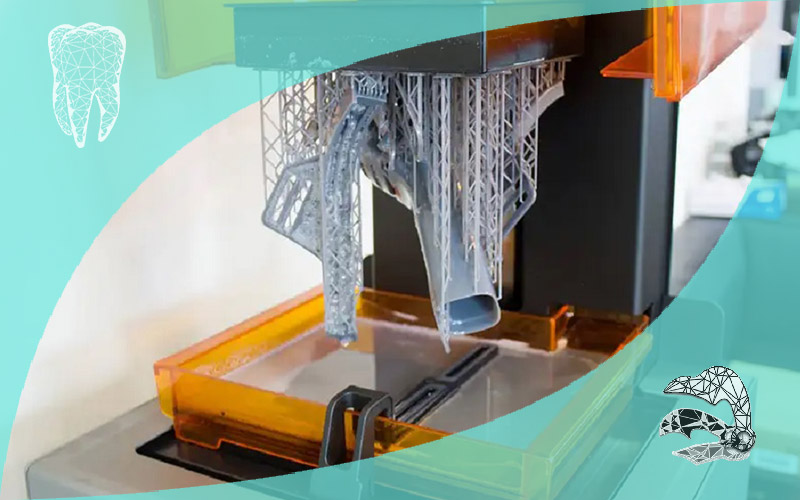
The most prevalent resin 3D printing technique, stereolithography (SLA), has gained enormous popularity for its capacity to create high-accuracy, isotropic, and watertight prototypes and end-use parts in a variety of advanced materials with fine features and smooth surface finish.
Resin is a type of thermoset material used in SLA 3D printers that react to light. Short molecular chains link up when SLA resins are exposed to particular light wavelengths, polymerizing monomers and oligomers into rigid or flexible geometries that are then solidified. Among the 3D printing technologies, SLA parts have the highest resolution and accuracy, the sharpest details, and the smoothest surface finishes. But stereolithography’s adaptability is its main benefit.
Innovative SLA resin formulations with a wide range of optical, mechanical, and thermal properties have been developed by material manufacturers to match those of common, engineering, and industrial thermoplastics.
How Fused Deposition Modeling (FDM) 3D Printers Work
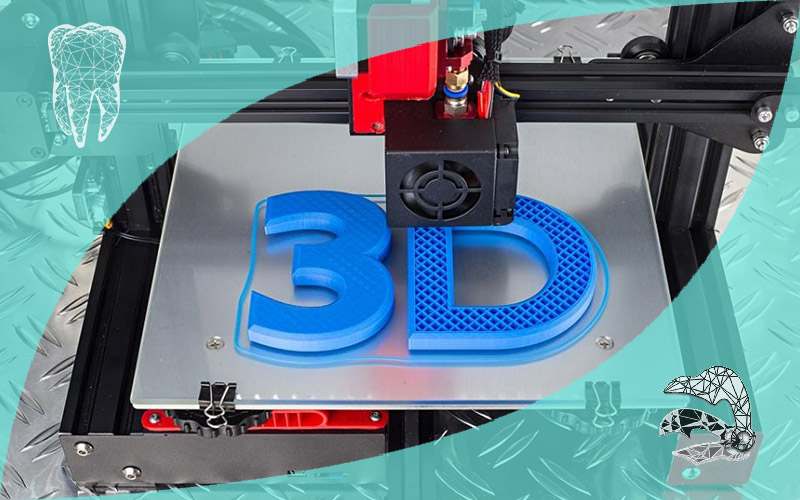
Due to the rise of home 3D printers, Fused Deposition Modeling (FDM), also known as fused filament fabrication (FFF), is the most popular type of 3D printing among consumers. FDM 3D printers create objects by melting and extruding thermoplastic filament, which is applied to the build area layer by layer through a printer nozzle.
Standard thermoplastics like ABS, PLA, and their various mixtures are all compatible with FDM. Simple proof-of-concept models and quick, low-cost prototyping of straightforward parts, like those that might typically be machined, benefit from the use of 3D printing.
FDM is not the best choice for printing intricate designs or parts because it has the lowest resolution and accuracy when compared to SLA or SLS. Chemical and mechanical polishing techniques can produce finishes of a higher caliber. Industrial FDM 3D printers use special supports to alleviate some of these problems and provide a wider variety of engineering thermoplastics, but they are also very expensive.
3D Printers based on Digital Light Processing (DLP)
Similar to their SLA equivalents, desktop DLP 3D printers are built around a resin tank with a transparent bottom and a build platform that is lowered into a resin tank to create parts upside down, layer by layer. However, the light comes from a distinct source.
DLP 3D printers flash an image of a layer across the entire platform, curing every point at once, using a digital projector screen. The Digital Micromirror Device (DMD), a dynamic mask made up of microscopic-size mirrors arranged in a matrix on a semiconductor chip, receives the light’s reflection.
The location of the liquid resin’s cure within a given layer is defined by quickly switching these tiny mirrors between the lens(es) that direct light towards the tank’s bottom or a heat sink. Since the projector is a digital screen, each layer’s image is made up of square pixels, creating a three-dimensional layer up of tiny rectangular cubes known as voxels.
How Selective Laser Sintering (SLS) 3D Printers Work
Engineers and manufacturers across numerous industries rely on selective laser sintering, the most popular additive manufacturing technology, to create durable, useful parts for various industrial applications.
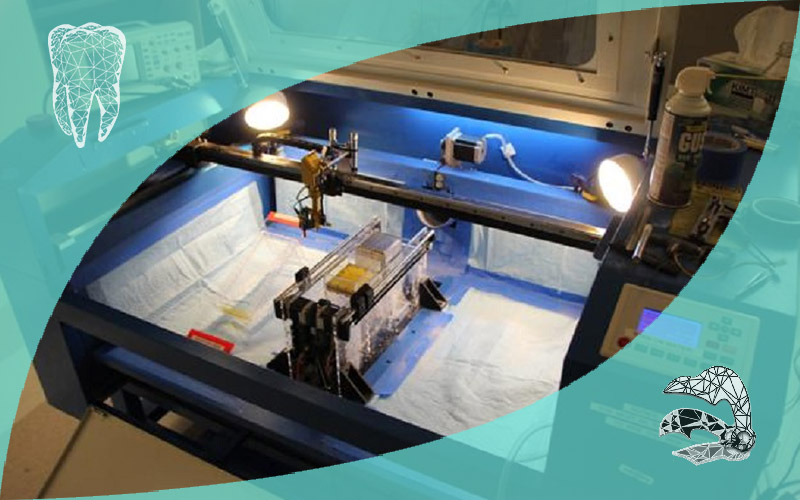
Small particles of polymer powder are fused by a powerful laser in SLS 3D printers. It is not necessary to use specific support structures because the unfused powder supports the part during printing. For complex geometries like interior features, undercuts, thin walls, and special features, SLS is the best solution. SLS-printed parts have excellent mechanical properties and strength that are comparable to injection-molded parts.
Nylon, a well-liked engineering thermoplastic with excellent mechanical properties, is the material used for selective laser sintering the most frequently. Additionally, stable against impact, chemicals, heat, UV light, water, and dirt, nylon is lightweight, strong, and flexible.
SLS is a popular option for functional prototyping among engineers and a more affordable option than injection molding for limited-run or one-off manufacturing due to its low cost per part, high productivity, and well-established materials.
How Selective Laser Melting (SLM) 3D Printers Work
Like selective laser sintering, selective laser melting uses a bed of powder and a heat source to produce metal parts. It is employed in the production of motor parts, dental and medically engineered apparatus, including implants and prosthetics, as well as industrial components for the aerospace industry.
3D Printers based on Laminated Object Manufacturing (LOM)
Laminated object manufacturing is regarded as a quick and affordable method of 3D printing objects with a variety of materials. Rather than for mass production, this method is primarily used for rapid prototyping. Designers frequently use this kind of 3D printing to present new concepts to investors, clients, and customers since it can quickly create a scale model.
3D Printing by Digital Beam Melting (DBM)
Digital beam melting as a type of 3D printing might be the most challenging, and it requires an expert to use electron beam melting technology. Components for the automotive, aerospace, defense, and medical industries are frequently printed using this technique.
What Are the Applications of 3D Printers?
The use of 3D printing by auto and aviation manufacturers has revolutionized both the design and production of fuselages and powertrains. For instance, to build its 787 Dreamliner airliner, Boeing used titanium parts that were 3D printed. An example of the significant potential impact of 3D printing on supply chains is the creation by General Electric in 2017 of a helicopter engine with 16 components as opposed to 900.
Nike, Adidas, and New Balance are using 3D printing to make their shoes in the fashion industry. Companies all over the world are pioneering 3D printing of the materials required to construct homes in the construction sector. Homes that are stronger than regular cinder blocks and less expensive can be constructed using layers of concrete in 24 hours.
Custom implants are made using 3D printing in the medical sciences. It’s possible that in the future, 3D printing technology will be used to create organs and body parts. 3D printing is now typical in the production of hearing aids. Making custom hearing aids is made possible by 3D printing, which also speeds up the production process.
Audiologists can use 3D scanners to produce a unique prototype using the scan’s reference points. Manufacturers can feed the scan into a 3D printer and print the entire set of hearing aids after perfecting the materials and ear shapes.
How Do 3D Printers Work in Industries?
The speed of 3D printing is currently too slow for mass production. The lead time for developing prototypes of parts and devices, as well as the tooling required to make them, has been shortened thanks to technology. This has a significant positive impact on small-scale manufacturers by lowering their costs and reducing the time to market, or the time between the conception of a product and its availability for purchase.
In comparison to subtractive manufacturing techniques like drilling, welding, injection molding, and others, 3D printing can produce intricate and complex shapes with less material. More innovation, experimentation, and product-based startups are possible thanks to the quicker, cheaper, and easier creation of prototypes.
The Future of 3D Printers Lies in Their Capability to Do Excellent Works
Advancements and applications in healthcare are just one exciting way that 3D printing is changing the world. In recent years, 3D printing has been used to produce personalized implants, human tissue, and prosthetics. Personalized treatment plans can now be created by surgeons and patients thanks to this technology.
The size of the global 3D printing market is predicted to reach $20.37 billion by the end of 2023. The market for 3D printing is anticipated to reach $88.28 billion by 2030, growing at a CAGR of 23.3% between 2023 and 2030.