3D SLA Printing in Dentistry
SLA (Stereolithography) technology, registered as the first 3D printing technology, was invented by Chuck Hull in 1984, and the first SLA 3D printer was released in 1987. This technology uses light to harden photosensitive resins to produce precise and highly accurate parts. Over time, SLA has become one of the key technologies in various industries, including dentistry. The use of SLA technology in dentistry began in the late 1990s. This technology has been particularly useful in the production of dental implants and surgical guides. Recent advances in related technologies such as CBCT scans and intraoral scans have significantly increased the use of 3D printing in dentistry. In the 2010s, desktop SLA printers were introduced, making this technology more accessible and affordable for non-industrial manufacturers and other professions, including dentists. These advancements have enabled more precise production and greater customization of dental products such as clear aligners, surgical guides, dental models, and temporary prosthetics.

Technical Fundamentals and Operating Principles of SLA Printers
SLA printers use vat photopolymerization technology to create 3D parts. In this process, a build platform slowly descends into a vat of liquid resin that is sensitive to ultraviolet light. A high-precision UV laser moves over the resin’s surface, solidifying the resin layer by layer according to the 3D design. This laser is directed by galvanometers, which are movable mirrors that precisely trace the layer designs.
SLA printers are composed of several key components:
- Resin Vat: Holds the liquid, light-sensitive resin.
- Build Platform: Where the 3D part is constructed layer by layer.
- UV Laser System: Provides ultraviolet light to cure the resin.
- Galvanometers: Mirrors that adjust the laser direction with the help of motors to accurately trace the layer designs.
- Recoater Blade or Wiper: Moves across the resin surface after each layer to prepare a new layer of resin for printing.
SLA technology is known for its high precision and ability to produce parts with fine details and smooth surfaces. It is also suitable for creating parts with complex geometries and small details that are challenging to achieve with other methods. Additionally, SLA is popular for its use of specialized resins, such as biocompatible resins for dental and medical applications. One of the main differences between SLA and other 3D printing technologies, such as FDM (Fused Deposition Modeling) and DLP (Digital Light Processing), is in accuracy and surface quality. SLA typically offers better surface quality than DLP and FDM but may require more time for printing and post-processing.

Applications of SLA in Dentistry: From Molding to Permanent Prosthetics
SLA technology has a wide range of applications in dentistry, from modeling to the production of temporary and permanent prosthetics. Due to its high precision and ability to produce parts with complex details, SLA has become one of the popular methods in dental manufacturing.
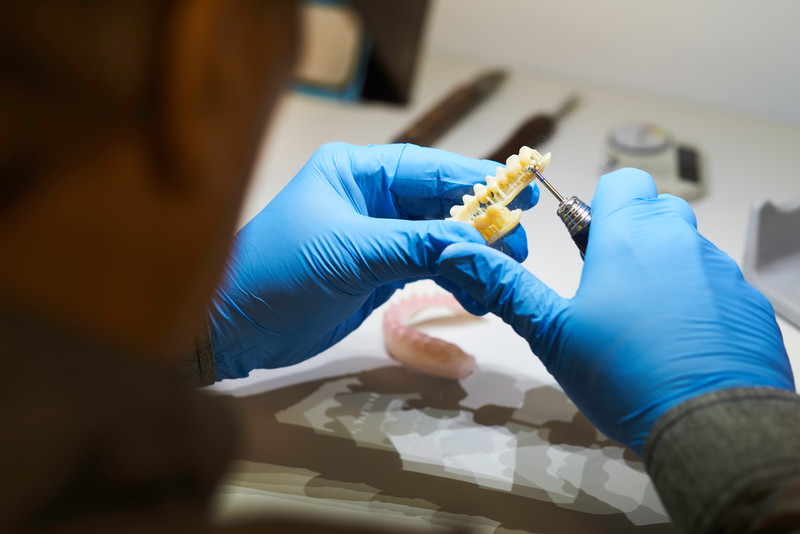
- Dental Modeling and Molding: One of the primary applications of SLA in dentistry is the creation of accurate dental models for patient assessment and treatment planning. These models can be made with high detail and unmatched accuracy, helping dentists perform procedures more precisely and effectively.
- Surgical Guides: SLA is used to create surgical guides that assist dentists in placing implants more accurately. These guides can be customized according to each patient’s specific anatomy, significantly reducing the risk of surgical errors.
- Temporary and Permanent Prosthetics: SLA enables the production of temporary and permanent prosthetics, such as dental crowns and bridges. These prosthetics can be produced quickly and with high precision, which is valuable for both patients and dentists as it reduces treatment time and enhances final quality.
- Clear Aligners: SLA is also used to produce clear aligners for orthodontics. These aligners are made precisely based on the digital model of the patient’s teeth, allowing dentists to perform orthodontic treatments with greater accuracy.
- Production of Dental Casts: SLA is employed in making dental casts used in various dental procedures, including removable and fixed prosthetics. These casts can be made from different materials, such as polymers and ceramics, which help improve the efficiency and durability of prosthetics.

Advantages of SLA for Complex and Precise Structures in Dentistry
3D SLA printing is highly valuable in dentistry due to its ability to create parts with extremely high detail and complex geometries. This technology uses a laser to harden thin layers of light-sensitive resin, enabling the production of models and prosthetics that cannot be achieved with other 3D printing methods.
- High Accuracy and Detail: SLA is known for its ability to produce parts with very high accuracy and intricate details. This feature is particularly useful for creating precise dental models and dental prosthetics that need to perfectly match the patient’s mouth structure. The high precision of the laser and the meticulous control of the layers help create smooth and accurate surfaces, making it ideal for use in permanent prosthetics and dental molds.
- Creation of Complex Structures: One of the biggest advantages of SLA is its ability to produce complex structures and unique geometries that are not possible with traditional manufacturing methods. Due to its layer-by-layer construction, this technology can create parts with intricate internal channels and hollow structures. This capability is especially useful in dentistry for making implants, surgical guides, and clear aligners.
- Variety of Materials Used: SLA allows the use of a wide range of resins, each with different properties. These resins can be transparent, flexible, or rigid and are used to produce parts with specific properties, such as temperature resistance or biocompatibility. This variety of materials enables dentists to create parts with unique characteristics tailored to each patient.
- High Speed and Efficiency: Due to its high printing speed and efficiency in producing parts, SLA is very suitable for rapid prototyping and prototyping. These features allow dentists to quickly produce and evaluate the parts needed for dental treatments, which helps improve treatment processes and reduce patient waiting times.

Challenges and Limitations of Using SLA in Dentistry
Despite its numerous advantages, 3D SLA printing in dentistry faces several challenges and limitations that affect its application and effectiveness:
- High Costs: One of the main limitations of using SLA is the high costs associated with it. The price of SLA printers and the resins used in this technology is typically higher than other 3D printing methods, such as FDM. These costs can be a limitation for some dental clinics and laboratories.
- Need for Post-Processing: After printing parts using SLA, post-processing steps are required, such as washing with isopropyl alcohol to remove residual resin and final curing of the parts. These additional steps add more time and cost to the production process and can also lead to health issues related to the use of chemicals.
- Environmental Limitations: The resins used in SLA 3D printing are often non-recyclable and harmful to the environment. Some of these materials can be toxic and pose risks to the health of staff and the environment. Additionally, the storage and disposal of waste materials can be challenging.
- Need for Technical Knowledge and Specific Skills: Effective use of SLA printers requires specific knowledge and skills. Staff must be able to correctly set up the equipment and work with various materials. This requires specialized training, which can be costly for some clinics.
- Issues Related to Material Supply and Regulations: Access to high-quality resins may be limited in some regions and may require approval from local health authorities. Additionally, the lack of uniform regulations and standards regarding the use of 3D printing in dentistry can hinder the widespread adoption of this technology.

Recent Advances and Research & Development in SLA and Consumables in Dentistry
In recent years, SLA technology and its associated consumables in dentistry have seen significant advancements. These advancements include the development of new materials, improvements in device performance, and the use of innovative technologies to enhance the quality and efficiency of dental prosthetics and other products.
Recent Advances in SLA Materials:
- Biocompatible and Antibacterial Materials: Recent research in SLA has led to the development of biocompatible and antibacterial resins. These resins, in addition to being biocompatible and reducing allergic reactions, can inhibit the growth of bacteria such as *Streptococcus mutans*, which is a major factor in causing tooth decay and biofilm formation. These properties are very useful for dental prosthetics and other dental products.
- More Durable and Resistant Materials: Researchers at the University of Colorado have developed new materials that include high-durability, wear-resistant photopolymeric polymers. These materials are suitable for 3D printing more resistant and accurate dental prosthetics, allowing the production of parts with greater durability and precision.
Technological Advancements in SLA Devices:
- New and Advanced 3D Printers: The use of advanced 3D printers, such as new inkjet 3D printers, has enabled the production of dental prosthetics with greater accuracy and customization. These printers use biocompatible and durable materials that not only enhance the quality and comfort of prosthetics but also reduce production time.
- Integration of Artificial Intelligence in Dentistry: Artificial intelligence (AI) is increasingly being used in dentistry to improve diagnoses and treatment planning. AI algorithms can analyze radiographs and scans with high accuracy, aiding in the early diagnosis of dental problems. This technology also significantly helps in personalizing treatment plans and managing patients.
Future Opportunities for SLA in Dentistry:
- Dental Tissue Regeneration: Regenerative dentistry is an emerging field that uses biocompatible materials and novel techniques to restore damaged or lost dental tissues. These new approaches not only help in rebuilding dental structures but can also facilitate the treatment of gum diseases and tooth loss.
- Focus on Preventive and Personalized Treatments: New approaches in dentistry emphasize preventing dental issues before they occur and creating personalized treatment plans for each patient. These approaches help improve treatment outcomes and foster better relationships between dentists and patients.

List of Top SLA Printer Brands and Related Products in Dentistry
To introduce the top SLA printer brands and related products in dentistry, several outstanding and popular brands in this industry are known for their high precision, reliability, and compatibility with various materials:
- Asiga Max
The Asiga Max printer is a popular choice in dentistry due to its very high accuracy and open system for materials. This printer can print with over 380 types of resins, giving users greater freedom in material selection. It is highly suitable for printing dental crowns and bridges and is frequently used by dentists and lab technicians. The Asiga Max also offers lifetime software updates and free technical support, making it an excellent option for dental clinics and laboratories.
- Stratasys J5 DentaJet
The Stratasys J5 DentaJet printer uses PolyJet technology and is ideal for high-production dental laboratories due to its high production capacity and very high precision. This printer can print at a layer thickness of up to 18 microns and can simultaneously print multiple types of devices and dental models. These features make the Stratasys J5 DentaJet suitable for producing orthodontic devices and a variety of dental models.
- EnvisionTEC Envision One
EnvisionTEC is a leading brand in 3D printers for dentistry. The Envision One model uses CDLM (Continuous Digital Light Manufacturing) technology and is ideal for producing precise dental models and surgical guides. This printer is known for its high accuracy, speed, and ability to produce parts with fine details.
- Formlabs Form 3B+
Formlabs, with its Form 3B+ model, is a popular option in dentistry that utilizes LFS (Low Force Stereolithography) technology. This printer is used for producing dental prosthetics, precise dental models, and surgical guides. It is recognized for its ease of use and support for biocompatible resins for use in the human body.
- 3D Systems NextDent 5100
The NextDent 5100 printer from 3D Systems is another outstanding option in dentistry that uses SLA technology to produce prosthetics, aligners, and dental models with high precision. This printer is compatible with various biocompatible resins and is suitable for dental clinics and laboratories that require fast and accurate production.

The Future of SLA in Dentistry: Challenges and Opportunities Ahead
Given recent advancements and emerging innovations, SLA technology in dentistry has a promising outlook. However, this technology will face several challenges and opportunities in the future.
Challenges:
- Need for High Precision and Quality Control: One of the biggest challenges in using SLA technology in dentistry is the need for high precision and quality control. The high accuracy of SLA printers is crucial for producing dental models and surgical guides. For example, in creating surgical guides, any deviation from the initial design can lead to clinical issues. Therefore, determining the appropriate level of precision and controlling production quality is essential to achieving acceptable clinical outcomes.
- High Costs and Limited Access to Materials and Equipment: The costs associated with purchasing and maintaining SLA printers, as well as consumables like specialty resins, can limit many dental clinics. This is particularly true in areas with limited resources, where access to this technology is more challenging.
- Need for Specialized Training and Skills: Effective use of SLA printers requires specialized skills and knowledge. Dentists and technicians must be able to work with advanced devices and select suitable materials for each application. This requires additional and ongoing training, which can be costly for some clinics and laboratories.
Opportunities:
- Advancements in Biocompatible and Antibacterial Materials: Developing biocompatible and antibacterial materials for use in dentistry presents a significant opportunity. These materials can be used to produce durable dental prosthetics resistant to bacteria, improving patients’ oral health and increasing the lifespan of prosthetics.
- Integration with Artificial Intelligence and Digital Technologies: Integrating artificial intelligence (AI) with SLA technology could revolutionize diagnostics and treatment planning. AI can analyze patient data, including dental history and diagnostic results, to provide personalized treatment plans that enhance the accuracy and efficiency of treatments.
- Increased Precision and Reduced Costs with Technological Advancements: With technological advancements and improved performance of SLA printers, it is expected that the precision and quality of products will increase while costs decrease. This could lead to greater adoption of this technology in dental clinics and laboratories.
Conclusion
3D SLA printing technology has become one of the essential and widely used methods in dentistry due to its high precision and ability to produce parts with complex details. This technology is used to create accurate dental models, surgical guides, temporary and permanent prosthetics, and clear aligners. Despite challenges such as high costs and the need for specialized skills, recent advancements in biocompatible materials and the integration of artificial intelligence provide a promising future for this technology in dentistry. These innovations have the potential to enhance the quality of dental treatments and increase access to advanced technologies.