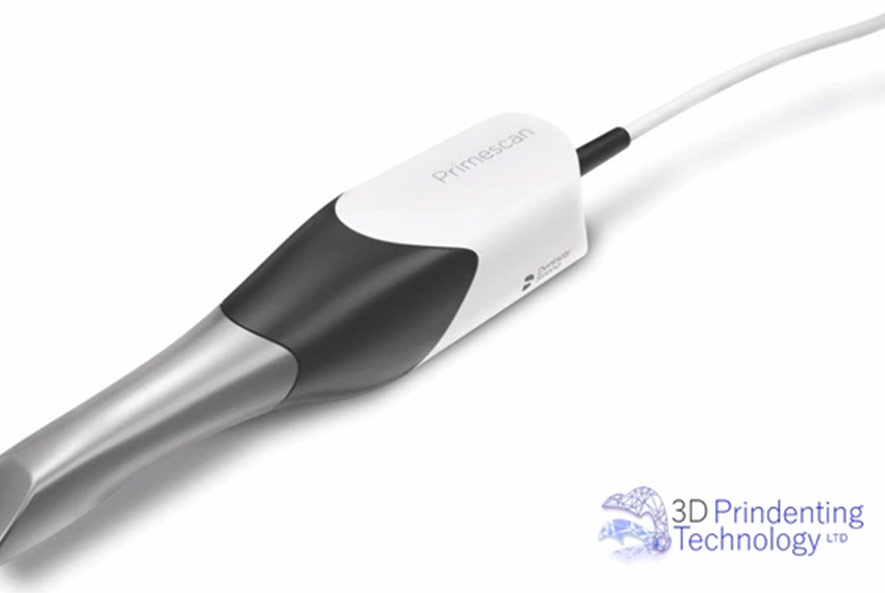
Find out why continuous evolution in oral scanning is the key to perfect results. Intraoral scanners are over 30 years old now and have gone through many generations of technology with constant betterment of their performance and price.

Key Challenges in Developing an Intraoral Scanner
Intraoral scanners are the new devices in dental diagnostic procedures. Nevertheless, the development of technology stands for some important challenges as follows:
1. Complex Systems Integrated.
The design of intraoral scanners has to integrate several relatively advanced and sophisticated, complex systems. Some of these comprise imaging and projection optics, high-speed digital circuits, and embedded software coupled with high-level image processing algorithms. It is surely more than a challenge in precision engineering; it is also very power-restricted and requires operation within a very minimal ambiance. In contradiction with large systems, common hardware, and open-source algorithms should be specially customized at every level to satiate optimum peak performance and dependability for these small systems.
2. The complex intraoral optic environment:
The intraoral scanning technology, on its part, underpins optical imaging. However, dental enamel’s semi-transparency poses a major problem in the oral cavity. Interference by tartar and saliva has previously been answered with the use of powder coating using traditional methods. New systems, however, have to cope with enamel scattering, thus reducing precision in the scanned result. The challenges in optics, therefore, call for continuous innovation in sensor technology and computational imaging techniques.
3. Size and Power Consumption Requirements
More generally, intraoral scanners represent just a good example of portable medical equipment that must balance correctly in size, power consumption, and operating effectiveness. In other words, realizing a small and powerful architecture needs state-of-the-art advances in optical and electrical system integration. This call requires ever-greater optical efficiency, robust systems of power management, and effective heat dissipation within a tightly constrained physical space.
5. High-Performance 3D Reconstruction
It involves the real-time processing of huge volumes of detailed 3D data, which emanate from intraoral scanners, to produce true-to-life digital images. 3D point cloud stitching for the lifelike model is computationally heavy and requires algorithmic designing. However, these are extremely specialized operations with huge computing capacity, beyond the comprehension limits of a layman. Ensuring such flawless functioning at its requisite level of speed and accuracy remains a challenge and area of continual research.
5. Algorithms for high-performance 3D reconstruction
Intraoral 3D scanners house large 3D point cloud data all processed in one piece, and after doing that part, it is to be displayed on the screen. The computational operations that utilize the potential of the arithmetic ability of the computer warrant effective algorithm design. Working on 10 to 20 pieces of data per second and doing these calculations in real time is much more difficult. Each line of code has to be modified painstakingly to achieve the following.
They’ve enabled improvement in dental diagnoses, and treatment planning, but come along with big technology challenges. They would need interdisciplinary cooperation for their solution. The only complementary innovation framework, for overcoming the challenges, is that of sensors and regulation. It’s only after mitigating these challenges that the dentistry sector may harness all the potential of intraoral scanners. It would boost the treatment of patients and diagnostics to dentists.
Intraoral Scanner Issues Resolved.
Implementation of IOS in dental clinics can alter a patient’s treatment protocol by offering advantages such as enhanced digital impression accuracy and added comfort to patients; however, some challenges can lead to its wide application. Awareness of these problems and their practical solutions can best be used to adopt the new technology into an existing protocol of a dental clinic. Here is an assembled version that contains both the problems and the solutions:
1. High Initial Costs: The intraoral scanner costs much to buy due to the initial purchasing cost; consequently, it consumes much in maintenance and software updating.
Provide financial incentives, such as subsidies and flexible leasing, that can help dental businesses face the cost of an upfront investment.
2. Learning Curve and Training Requirements— Challenge: The adoption of intraoral scanners will require the dental practitioner to invest time in training.
Solution: Help facilitate training programs on how to use, develop, and provide ongoing support so dental professionals can easily become scanner savvy.
3. Working with pre-existing systems: One of the challenges is coordinating the intraoral scanner with pre-existing dental office management, laboratory software, and workflows.
Solution Fast and efficient software solutions computationally, which are compatible with the existing system, ensuring that there are fewer inefficiencies and headaches.

4. Data management and security challenge: How to store and secure the huge sources of data from intraoral scanners and how to transport this information to the dental laboratories.
Solution: Implement comprehensive data security that will give the confidence that any patient information is deemed safe.
5. Technical difficulties: Intraoral scanners may display difficulty acquiring scans in areas difficult to reach in the oral cavity, like subgingival borders or areas with high saliva content.
-The Solution: Continuous technological advancement in enhancing the precision, speed, and utility value of the intraoral scanners themselves to the point that they are capable of even handling tough situations.
6. Affect Patient Comfort and Acceptance—Challenge: In some patients, this could be viewed as uncomfortable or invasive, especially when patients have a strong gag reflex or an oral phobia.
This will ensure a light scanning technique, increasing patient experience, acceptance, and comfort with intraoral scanning by educating the patient on its benefits.
7. Obsolete Technology — Threat: Constant development in technology can make an intraoral scanner obsolete in no time; a dental clinic needs to update.
Solution: Ensure that your investment in intraoral scanning technology is future-proofed by purchasing technologies that will accommodate innovation and industry trend changes.
8. Skepticism and Resistance to Change – Challenge: Some dentists could have a sense of skepticism in technology about the intra-oral scanner being beneficial compared to conventional methods or resist changing their way of working.
– Solution: Articulate the objection, prove the value of intraoral scanners with sound facts and guarantees, and provide consistent support for them.
9. Regulatory and Compliance Issues – Challenge: The existing digital technologies do not support compliance with associated regulatory standards, including maintaining health data privacy and protection regulations.
Solution: Collaborate with compliance experts to ensure that the use of intraoral scanners is relevant to all rules and standards.
10. Power and an Internet Connection: The scanner must be powered and have an internet connection that allows it to enable data transportation and processing over the cloud.
Solution: Backup systems should be in place to ensure that if power or connectivity fails, activities can continue without interruptions or alterations.
Improving Dentistry with Intraoral Scanning Technology
The above points discuss the effects, issues, and benefits of intraoral scanners in the dentistry field. They help a person understand the technology and how it impacts dental care.
The following are some bulletins for discussing the use of intraoral scanners in dentistry, implications for intraoral scanning, challenges, and possible developments:
1. Patient Experience and Comfort
Although you have quoted patient comfort, one would have to bring out how the design and operation of an intraoral scanner make the experience better for the patient. For example, the ergonomic shape of the scanner wand, reduced time of scanning, and non-invasive character of digital impressions increase comfort and satisfaction for patients. Upon review of the differences between the traditional protocols for taking impressions with alginate molds and digital impressions, some clarification on the changes in the experience related to patient treatment would be helpful.
2. Complex case accuracy and precision
Although generally well-rated for their accuracy, intraoral scanners face significant challenges in some cases, like edentulous arches, deep subgingival regions, and undercuts. Efficiency in capturing such areas varies between scanners, with the topic of ongoing research being how to perform with optimal accuracy in challenging conditions.
3. Impact on Dental Laboratory Procedures
Besides, intraoral scanners have changed the workflow of the dental laboratory. They do away with the very accurate digital impression that does away with physical models; hence, reducing turnaround time for crowns, bridges, and even orthodontic appliances. These are brought out further in that these investments are such that the instruments and their handlers demand training to appropriately handle the digital data.
4. CAD/CAM Integration
Another technological barrier that is yet to be crossed is the compatibility of different scanners and CAD/CAM systems. The industry is not standardized in file formats; in fact, they pride themselves in their proprietary formats, namely STL, PLY, and OBJ. This might complicate information flow between the platforms, causing a certain level of data loss and errors in teeth rehabilitation.
5. Environmental Impact
The move from conventional to digital impressions is in itself a considerable environmental saving. Normal processes use waste material, including alginates, plaster, trays, and so on. The intraoral scanner removes these needs and thus reduces the environmental impact dental offices have.
6. AI and Machine Learning Integration
Stronger AI and machine learning algorithms will therefore be able to identify errors in real time, provide better stitching, and enable diagnostic procedures. AI and machine learning may also increase scanning speed and accuracy, identifying areas that require more scanning or even predicting the optimal routes to scan.
7. Business Impact of Dental Centres
There are important economic considerations in the use of intraoral scanners in dental offices. The cost of implementation is high, although history attests to the fact that most practitioners always later consider it economical because of the long-term savings on materials, increased patient turnovers, and reduced chair time. Digital impressions also save time and money due to fewer remakes and revisions.

8. Remote Dental Imaging
They would also be fit for telemedicine in doing remote consultations whereby digital images are shared across geographies between professionals and the patient. Mainly, this helps people who live in areas where dental professionals are not readily available, as the level of accuracy and timeliness of diagnosis and planning for treatment are enhanced.
9. Legal and ethical considerations
Data ownership, permission, and processing of patient information are both legal and ethical considerations in using intraoral scanners. Digital impressions, as a record, must be stored electronically. Recording the information is only part of the equation: The information needs to be protected and utilized appropriately.
10. Interface and Software Usability
Usability and user interface design correlated with the scanner software are critical factors to be easily incorporated into practice for a dental practitioner within his or her clinic. Poor interfaces contribute to errors and frustration, with interfaces often seen as the barrier to adoption. The Future Of Intraoral Scanners
Looking ahead in perspective, intraoral scanners are capable of revolutionizing dental practice given improved diagnostic capabilities and much better patient care. Overcoming the technological challenges reviewed above and possibly others, if the development is sustained further, the dentistry sector can derive the maximum benefit from this breakthrough technology.
Choosing the Best Intraoral Scanner
Selecting the right intraoral Scanner Solving these exact challenges with exact solutions, dental offices can use intraoral scanners. This will enhance patient care and keep them current with tech advances. The intraoral scanner is a complex device high on technology. Sirona, iTero, Planmeca, Carestream Dental, Medit, and Alliedstar are all leading the R&D on intraoral scanning.
Even the creator of mouthwipe tech itself, Sirona, finds R&D hard at times. A dentist who is looking into an intraoral scanner needs to pay more attention to how tech-savvy the company is. A company that’s technically good enough can make a great product and refine the necessary algorithms. That will make doctors more productive with it. Find out how the right intraoral scanner can transform your practice; visit our website to learn more.