3D printing is an advanced technology that creates physical objects by adding material layer by layer based on digital models. This technology was first introduced in the 1980s and was initially known as Rapid Prototyping. The early applications of this technology were for producing prototypes, which were cheaper and faster than traditional manufacturing methods. In 1984, Charles Hull, the founder of 3D Systems, filed a patent for the invention of stereolithography (SLA). This technology was the first 3D printing method that converted digital data into physical models. The RepRap project was launched in 2005 by Dr. Adrian Bowyer at the University of Bath with the goal of developing a printer capable of printing most of its own parts. This project was released as open-source, attracting many enthusiasts to join.

Types of 3D Printing Technologies
3D printing is carried out using various technologies, each with its own advantages and disadvantages, including:
- Directed Energy Deposition (DED): The DED method uses thermal energy to melt and combine materials (metal powder and wire) in a heated or vacuum printing area. This method is mainly used for printing new objects or repairing existing ones.
- Laser Engineered Net Shape (LENS): The LENS method uses a laser to selectively melt specific areas of powdered material in the printing area. These layers solidify before the next layer is added.
- Electron Beam Additive Manufacturing (EBAM): The EBAM method employs an electron beam and a vacuum printing area to melt metal powder or wire. This method is particularly suitable for industrial applications.
- Sheet Lamination: In the Sheet Lamination method, very thin layers of materials are bonded together. This is done by layering materials and adhesives, which are then cut using a laser or blade.
- Binder Jetting: The Binder Jetting method is similar to inkjet printers, using nozzles to deposit materials onto the printing area. This method employs a binding agent to join layers of powder, requiring post-processing steps after the print is completed.
- Material Jetting: In the Material Jetting method, small nozzles deposit droplets of photopolymer wax layer by layer onto the printing bed. These droplets are cured using UV light. This method is suitable for prints requiring high precision and smooth surfaces.
- Rapid Liquid Printing (RLP): RLP is an experimental process that works in a gel suspension. It allows the physical ability to draw the object from multiple directions within a large three-dimensional gel space. Materials like rubber and foam can be used in this process.
- Direct Metal Laser Melting (DMLM): The DMLM method uses a laser to fully melt metal powder, creating pools of liquid. These pools combine with additional material added in the next layer to form the final object.
- Direct Metal Laser Sintering (DMLS): The DMLS method uses a laser to sinter or partially melt metal powder layer by layer. This method can use various metal powders such as titanium and aluminum.
- Electron Beam Melting (EBM): The EBM method uses a focused electron beam in a vacuum printing area to melt metal powders like titanium, stainless steel, and copper. This method is faster than other PBF methods and produces larger layers with rougher surfaces, resulting in less residual stress and distortion.
- Selective Heat Sintering (SHS): The SHS method uses thermoplastic powders selectively melted by a heated head. New powder is added to the printing area, and this layer-by-layer process is repeated.
- FDM/FFF (Fused Deposition Modeling/Fused Filament Fabrication): In this method, a plastic filament is melted and deposited layer by layer. This technology is very popular due to its low cost and ease of use.
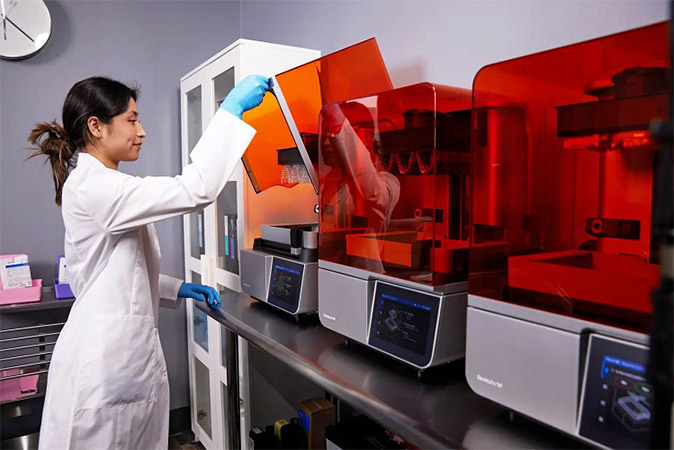
- SLA (Stereolithography Apparatus): In this method, liquid resin is solidified layer by layer using UV light or laser. This technology offers high precision but also comes with higher costs.
- SLS (Selective Laser Sintering): This method fuses fine powders using a laser. It is suitable for industrial applications and has higher costs compared to FDM and SLA.
- DLP (Digital Light Processing): The DLP method is a type of 3D printing technology that uses a digital projector to solidify thin layers of liquid resin. This method uses UV light reflected by tiny mirrors to solidify entire layers at once with high precision, making it suitable for fast and accurate printing of parts.
Materials Used in 3D Printing: Filaments, Resins, Metal Powders
The materials used in 3D printing are highly diverse and include the following:
- Filaments: These include PLA, PETG, ABS, and composite materials like woodfill and bronzefill. PLA is one of the most popular materials due to its ease of printing and smooth finish, while ABS has higher temperature resistance and is suitable for mechanical parts.
- Resins: These include standard, transparent, casting, durable, and biocompatible resins. Resins are used in SLA technology and vary in price depending on their specific properties.
- Metal Powders: Used in SLS technology, these include nylon powders and composite materials. These materials are highly suitable for industrial applications and mechanical parts.
Common 3D Printing Techniques and Methods in Dentistry
Fused Deposition Modeling (FDM)
FDM is one of the most common and cost-effective 3D printing technologies used for producing mechanical parts and prototypes. In this method, a plastic filament is melted and deposited layer by layer to form the final part.
Applications of FDM in Dentistry:
- Use of Biocompatible Resins for Dental Implants: The use of biocompatible resins in FDM technology is very beneficial for creating dental implants. These resins are compatible with the human body and are ideal for producing parts that are placed in a patient’s mouth.
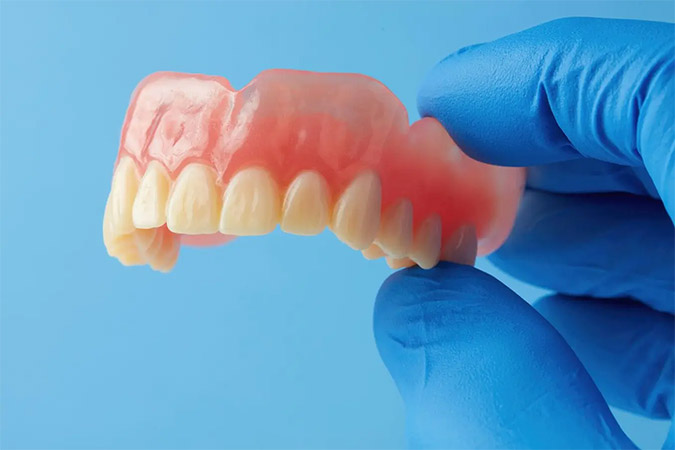
- Design and Print of Custom Dental Prosthetics: FDM technology allows for the design and printing of custom dental prosthetics. By using digital scans of a patient’s mouth, precise models can be created and then custom prosthetics can be accurately produced with FDM 3D printers, tailored specifically for each patient.
Advantages of Using FDM in Dentistry:
- High Speed and Accuracy: FDM technology allows for the fast and accurate production of dental parts, reducing the time and costs associated with dental treatments.
- Lower Cost: The cost of producing parts using FDM is lower compared to traditional methods, making it cost-effective for both patients and dentists.
- Capability to Produce Custom Parts: FDM enables the production of parts that are fully tailored to each patient’s needs, improving the quality of treatment and patient comfort.
Stereolithography (SLA)
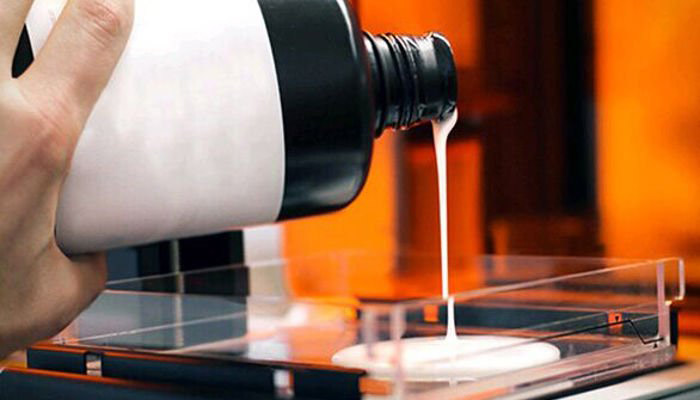
SLA 3D printing is one of the widely used methods in dentistry. This method produces precise and high-quality parts that are essential in dental applications by using UV-sensitive resins. SLA utilizes a UV laser to cure thin layers of resin, repeating this process until a complete 3D part is formed.
Use of Biocompatible Resins
One of the significant advantages of SLA in dentistry is the use of biocompatible resins. These resins are suitable for use in the human mouth and body, making them ideal for producing implants, prosthetics, and dental components. Biocompatible resins have good resistance to the oral environment and do not cause sensitivity or adverse reactions.
Design and Print of Custom Dental Prosthetics
Another significant application of SLA in dentistry is the design and printing of custom dental prosthetics. This method allows for the production of precise and custom-fitted prosthetics that meet the specific needs of each patient. Using 3D scanners and design software, an accurate model of the patient’s mouth is created, and then the appropriate prosthetic is produced using an SLA printer. This process not only reduces the production time of the prosthetic but also improves its accuracy and quality.
Given the numerous advantages of SLA, this technology has become one of the primary methods in dentistry and is rapidly expanding. Due to its high precision, customization capabilities, and use of biocompatible materials, SLA is highly suitable for producing dental parts and significantly reduces treatment time and costs.
Digital Light Processing (DLP)
Digital Light Processing (DLP) is a 3D printing technology that uses a digital light projector to solidify photopolymer resins. In this method, thin layers of liquid resin are rapidly cured by UV light, forming a 3D object. Due to its high precision and faster speed compared to other methods, this technology has gained significant attention, especially in the medical and dental industries.
Applications of DLP in Dentistry
The use of DLP in dentistry is highly popular due to its high precision and the ability to quickly produce prosthetics, implants, and dental models. Some of the main applications of this method in dentistry include:
- Dental Implants: The biocompatible resins used in DLP enable dentists to create custom and precise implants for each patient. These implants are specifically designed and printed based on 3D scans of the patient’s mouth, requiring fewer adjustments and modifications in later stages.
- Custom Dental Prosthetics: DLP allows for the production of dental prosthetics with very high accuracy. Dentists can create prosthetics that are precisely sized and shaped to meet each patient’s needs. These prosthetics fit better in the patient’s mouth due to their high accuracy and superior surface quality.
- Educational and Diagnostic Models: Dentists and dental students can use 3D printed models created with DLP for educational and diagnostic purposes. These models accurately replicate dental structures, aiding dentists in more precise treatment planning for their patients.
The use of DLP in dentistry, due to its accuracy, speed, and high quality, enhances the treatment process and prosthetic production. This allows dentists to provide better services to their patients.
Selective Laser Sintering (SLS)
SLS, or Selective Laser Sintering, is a 3D printing technology that uses a laser to partially melt (sinter) powdered materials, converting them into a solid structure. This process involves spreading a thin layer of powder over the build surface and then selectively sintering it with a laser according to the digital model. This layer-by-layer process continues until the entire object is formed.
Applications in Dentistry
In dentistry, SLS is particularly useful for creating complex and precise structures that are difficult to produce using traditional manufacturing methods. This technology is commonly used to create dental prosthetics, including crowns, bridges, and partial dentures. The precision of SLS enables the creation of custom prosthetics that match the specific anatomy of each patient, providing a more comfortable experience for the patient.
Materials Used
In dentistry, SLS primarily utilizes biocompatible materials such as nylon and various metal powders, including titanium and cobalt-chromium alloys. These materials are chosen for their strength, durability, and compatibility with the human body, making them ideal for long-term use in dental applications.
Advantages
- High Precision and Accuracy: SLS can produce intricate details and complex geometries with high precision, essential for dental applications that require exact fit and fine details.
- Customization: Each dental prosthetic can be customized to meet the specific needs of the patient, enhancing the effectiveness and comfort of the treatment.
- Durability: The materials used in SLS, particularly metals like titanium, result in strong and durable prosthetics that can withstand the forces exerted during chewing and other oral functions.
Challenges
- Cost: The initial investment in SLS technology and materials can be high, although long-term savings are realized through reduced labor costs and material waste.
- Post-Processing: Parts produced with SLS often require post-processing, such as polishing and coating, to achieve the desired final surface finish and mechanical properties.
Conclusion
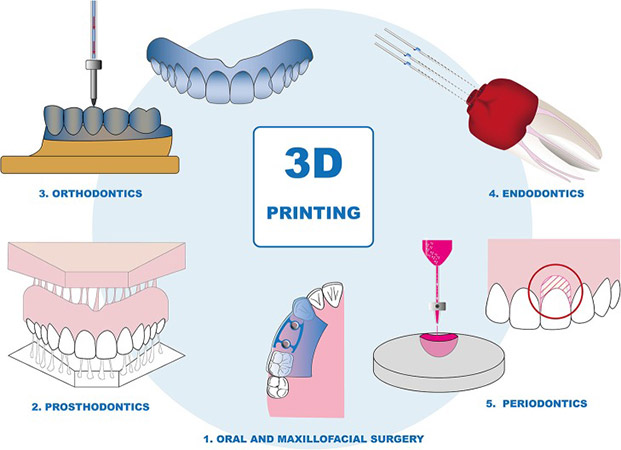
3D printing, leveraging diverse techniques and materials, has brought significant advancements across various industries. In dentistry, this technology enables the production of precise and custom parts tailored to the specific needs of each patient. Different 3D printing methods, including FDM, SLA, DLP, and SLS, each offer their unique advantages and applications. These technologies not only help reduce production time and costs but also provide higher quality and accuracy. The use of biocompatible materials in these processes ensures tha