What Is the Speed of Investment in Dental 3D Printers?
Dental caries of permanent teeth affected 2.3 billion people worldwide as of 2020. More than 530 million of them were children. These statistics demonstrate that a significant portion of the global population suffers from dental problems, and that to address this issue, a strong global dental care infrastructure that offers prompt services is required. More than 30% of dental clinics and labs all over the world have made an investment in dental 3D printers to digitalize their clinics. Innovative 3D printing technologies advance more and more every year. A new industry that started with the creation of dental implants has taken off. In this article, we are going to explore the benefits of investment in dental 3D printers.
Advantages of Investment in Dental 3D Printers
While many physicians continue to view 3D printers as an unnecessary hassle that needs excessive training and as work that is not worth the reward, this is not the case. Consider this if the price is a concern for you: by delegating some of the lab’s simple tasks and reserving them solely for design work, you could reduce your lab bill by up to 75%.
Like anything else, after a few tries, you’ll wonder why you took so long to send these out. Some dentists spend thousands of dollars each month paying others to perform labor that can now be done easily on reasonably priced tools (given the potential savings).
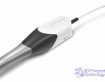
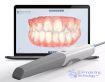
If you do your research on specific brands, you may find offers that group the resins with the printer along with other sets of accessories to hasten the post-processing and make it simpler than in the past. Intraoral scanners can also be included in bundles to complete the digital workflow. A good sales representative will provide you with all the information you need to choose the best package for your office.
This has made dental 3D printers to be positioned as the industry’s next big thing. By resolving issues with timing, accuracy, exclusivity, and cost, among others, it has demonstrated its value. Patients can now receive unique implants that perfectly fit them, without any mistakes or repetitive procedures, with minimal hassle, and for 80% less money than they previously paid. On the other hand, the global dental 3D printing market is anticipated to expand at a CAGR of over 29.2% from $1.9 billion in 2020 to $8.6 billion by 2026.
What Is the Return on Investment in Dental 3D Printers?
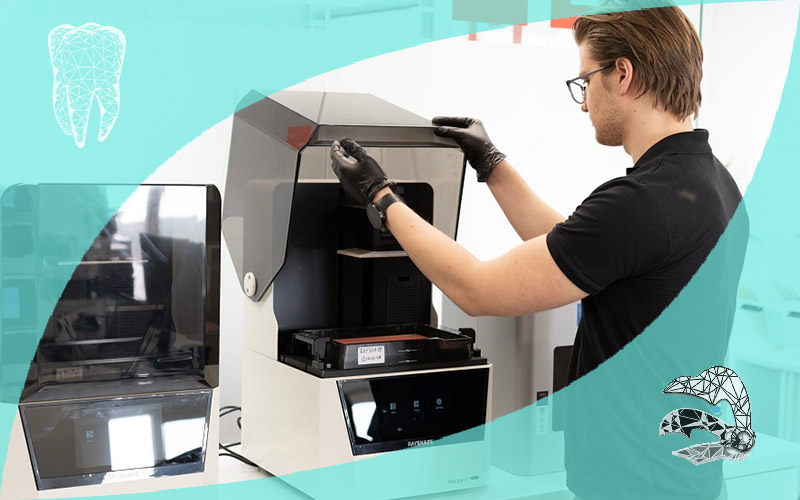
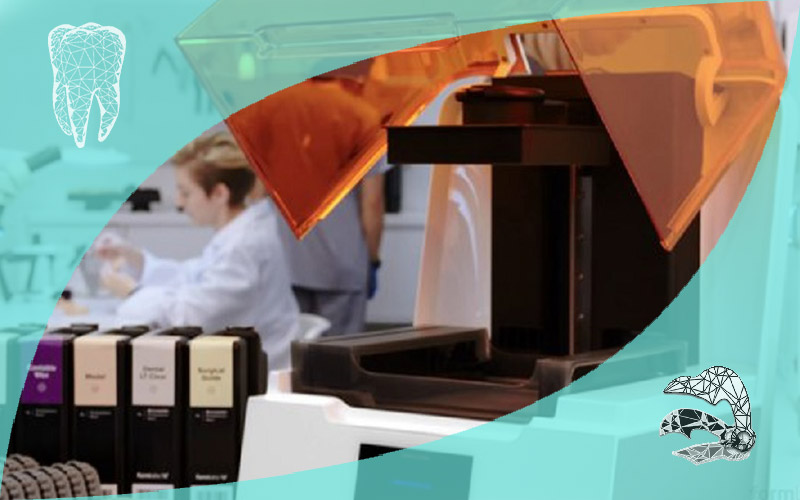
The most affordable digital workflow component for a dental office is a 3D printer. For just under $10,000, dental offices can start using a 3D printer, complete with printing supplies, a dental service plan, and post-processing equipment. An ROI of 20% can be easily accessible.
Manufacturers have reduced the cost and increased the accessibility of dental 3D printers for businesses thanks to new technologies. Increased productivity, financial savings, and increased accuracy are just a few advantages that 3D printing brings to the dental industry. Dental products like prosthetics, crowns, bridges, and implants can be produced more quickly and at lower costs with the aid of dental 3D printers.
These days, 3D printing for dentists offers new possibilities for CBCT and intra-oral scanning, denture replacement, aligner trays, models, surgical guides, temporary crowns, and more. In what follows, we will give you a detailed explanation of whether making an investment in dental 3D printers could revolutionize your dental practice.
Customization that Is Efficient and Affordable
Customization underpins much of dentistry as a whole. You operate within the particular constraints of each patient’s mouth during just about every dental procedure. Denture, crown, and other dental labs are excellent at fulfilling the dentist’s details. Imagine, though, if you and your business were fully customizable.
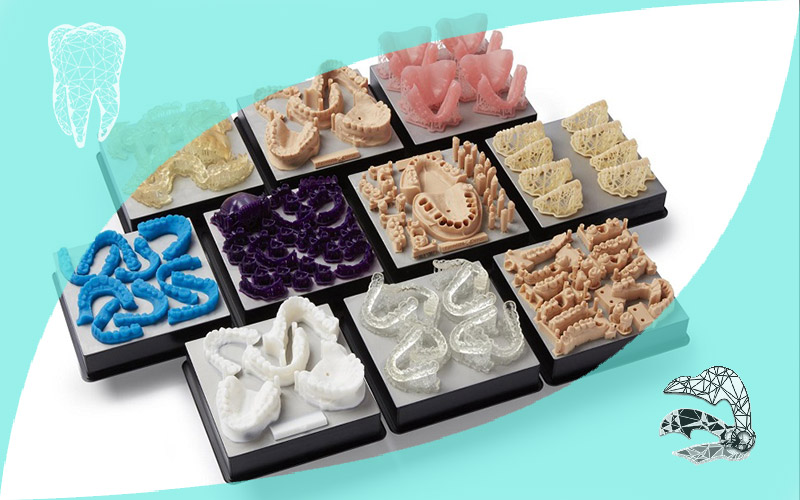
Some dental prosthetics, like permanent crowns, can’t yet be constructed with full functionality. But consider if you had access to dental 3D printing on-site. In addition to casting or pressing restorations, your business may also produce temporary crowns, dentures, aligners, models, and surgical guides. You may be able to hyper-personalize your patient’s care using this technology in new and creative ways.
Dentists Who Make an Investment in Dental 3D Printers Will Profit More
It is possible that investment in dental 3D printers for dentists will cost a lot of money. In the long run, however, these expenses may generate and increase revenue opportunities for your practice. The first benefit is that you won’t have to pay for other outside laboratories. Or at the very least, you won’t need to as frequently, which over time can result in sizable savings.
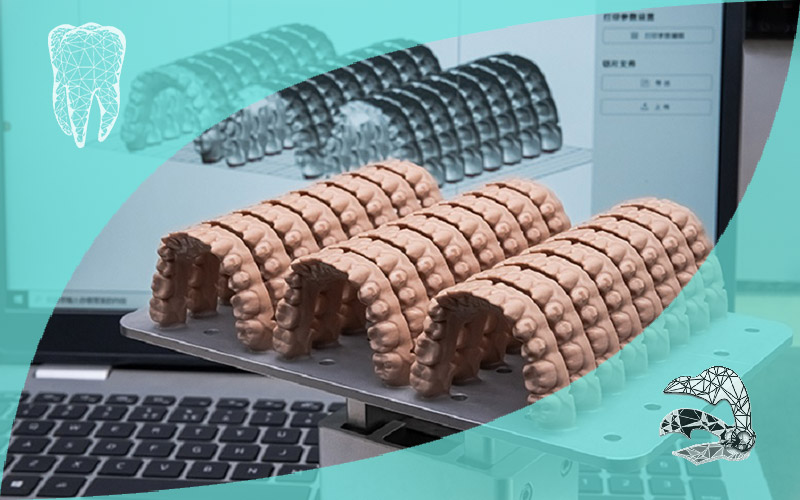
However, there are other ways that dental 3D printing can boost profits. A good example is the dentists’ production. A patient’s dentures might eventually need to be replaced. Due to daily wear and tear, even the strongest dentures eventually need to be replaced. The process of replacing dentures could become less expensive for the patient and more profitable for your business with the help of 3D printing.
On the other hand, dentures can be produced much more quickly and inexpensively using dental 3D printers than they can using conventional manufacturing techniques. A patient may need to visit the dentist more frequently to get replacements if their 3D-printed dentures are less durable.
Manufacturing and Financial Potential of Making an Investment in Dental 3D Printers
Even if the patient’s costs are lower, your practice will eventually make more money from the sales of the dentures. Why? Because you aren’t paying the lab to make the replacement dentures, you might get paid more than once for the replacement process. The following are manufacturing and financial potentials that help the return on investment in dental 3D printers:
- Dentures can be provided to patients faster and with a less upfront cost
- The frequency of replacement for 3D-printed dentures may increase
- Patients come back more frequently to dentists for additional care
- Due to the patient’s investment in the subsequent set of dentures, you will profit from this
Your Techniques Can Be Made Better
You can make sure that implant placement is more precise and customizable than ever before by using 3D-printed surgical guides. Such guides could expedite the procedure while ensuring the highest-quality outcomes as more patients look to implants as a treatment for severe tooth decay and cosmetic issues.
Improved Patient Experience Thanks to Visualization
The patient is the driving force behind all of these developments. We have discussed how they can receive better results from dental 3D printers for less money upfront. The patient experience can, however, also be enhanced by these technologies.
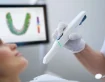
Patients feel much more at ease about consenting to the procedure when they can view digital renderings and models of the final outcome of their treatment. Patients with dental anxiety will particularly benefit, but even those who adore spending time in your dental chair will value seeing the final result on display.
The ability to present a rendering to your patient with the knowledge that, upon their approval, you can press a button and ensure the procedure is seamless is possible when you make an investment in a dental 3D printer.
How Can You Optimize Your Investment in Dental 3D Printers?
By choosing the best dental 3D printer, creating 3D printing policies, implementing 3D printing training, enhancing 3D printer performance, and keeping an eye on the results, dental 3D printing can be optimized for your practices. A successful 3D print investment can be ensured by optimizing 3D printing procedures.
Don’t worry if you’re not comfortable using your own design abilities; making print files from the scans doesn’t have to be your responsibility. While with some practice you’ll undoubtedly become a design master, no one would blame you for delegating that work to your devoted lab team.
You can upload items to the printer with ease if you let them handle the design work. Even though those times are long gone, 3D printing does not require you to spend the entire day at a computer. Additionally, your team will enjoy learning how to use all the new tech gadgets.
Now that the price is in line with the return on investment, you can still turn a nice profit even if you send out the scans to take the guesswork out of the design. The accessory equipment items are also worth looking into for the best user experience because you get what you pay for. They significantly reduce the amount of manual labor and increase convenience.
The Future of Dental 3D Printers
The market for dental 3D printing is expected to expand in the years to come as a result of significant investments made by market participants and ongoing technological advancements. In 2021, it was estimated to be worth $3.25 billion. By 2028, it is anticipated to grow by 19.8%, to $8.29 billion.
The adoption of biocompatible and sustainable materials, as well as the incorporation of artificial intelligence, cloud networks, and machine learning with technology, among other developments, will have an impact on the growth trajectory of this industry.