3D Intraoral Scanners Have Disrupted Traditional Dentistry
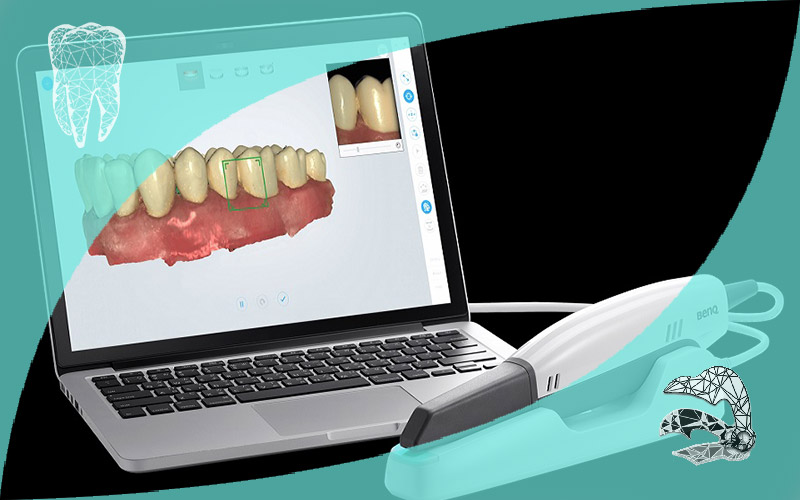
Dental professionals can create digital impressions using an intraoral scanner. Instead of pouring models, you can use software to digitize, examine, and manipulate the scanned images. The area to be scanned is illuminated by the scanner’s light source. A precise 3D surface model displaying the geometry of the teeth and gingiva is then created by processing thousands of images taken by imaging sensors and processed by scanning software. Instead of manually waxing models, CAD software is used to design restorations. Besides offering numerous advantages, these handheld devices help dentists in saving costs. In this article, we are going to explain 3D intraoral scanners and their uses.
What Are Intraoral Scanners Used for?
3D intraoral scanning is a technique for creating a digital replica of your teeth. Contrary to intraoral photography, which is two-dimensional like all other types of digital photography, intraoral scanning is three-dimensional, and the result is a three-dimensional “model” of the object being scanned.
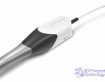
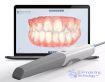
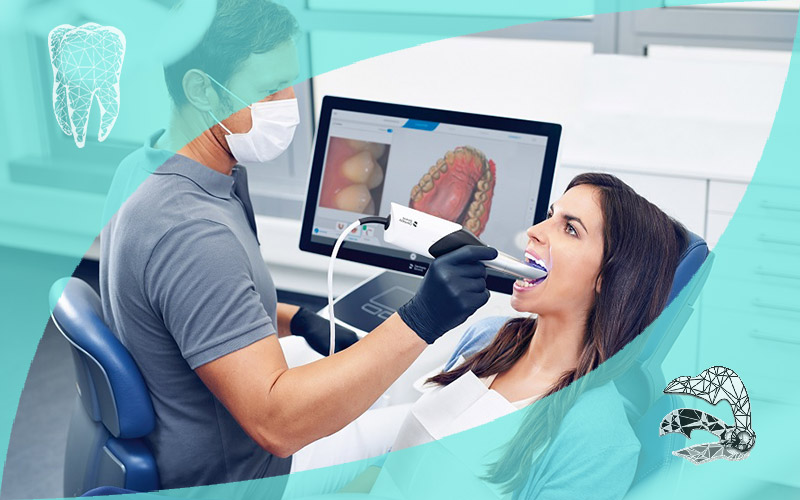
When a dentist, hygienist, or assistant scans over the entire surface of the teeth with an intraoral scanner, a tiny, wand-shaped camera takes thousands of tiny images of the teeth. On a connected computer screen, these images instantly transform into a digital model. To get a complete picture of your teeth, the dental professional taking your image keeps an eye on the building model and adjusts or corrects any areas of deficiency as scanning progresses.
What Are the Benefits of Intraoral Scanners?
Depending on your level of experience, 3D intraoral scanners perform faster than analog impressions. Additionally, there is no longer any debate about the functionality in terms of workflow and usability. In the following, we will discuss some of the most important advantages of 3D intraoral scanners.
Better Accuracy
Numerous studies support the accuracy of intraoral scanning. The biggest source of error in your lab is your impression, which you immediately remove by doing away with analog impressions from your workflow.
The most significant challenge, according to 47% of labs, is the poor quality of the analog impressions they receive from dentists, according to LMT magazine’s most recent State of the Industry report. Additionally, they claimed that using digital impressions is much simpler and more precise.
Improved Impression Material and Shipping
Using a 3D intraoral scanner can save you a ton of money, depending on how your practice is set up. The digital workflow virtually eliminates the need for physical impressions for PVS material and plaster for models. In addition, shipping and storage costs can be reduced. If you are an orthodontist, you can digitize all of your models.
More Time Saving
Many studies show that using 3D intraoral scanners can help you save time. You will see that there is no comparison between the digital and analog workflows for producing aesthetic restorations. It takes five minutes to digitally scan a patient’s mouth. There isn’t any use of impression material, no waiting for the PVS to dry, no gag reflex in patients, and no mess. It’s a significant adjustment that gives you more time to see more patients.
Faster Workflows
Some medical professionals find that the digital workflow allows them to complete almost as much work as they have in the past, but in half the time. Some of them, for instance, appreciate how they can provide a patient with a broken crown with a brand-new crown in just one visit.
Increased Patient Comfort
When considering going digital, most people focus on the accuracy and functionality of 3D intraoral scanners, but for you, the advantages for your patients may be the main driver. With digital impressions, patients can enjoy the convenience of avoiding traditional impressions’ unpleasant-tasting materials, heavy, cumbersome trays, and potential gag reflexes.
Numerous studies show that patients favor digital workflow. A recent study shows that ALL patients (100%) prefer digital dentistry. Digital dentistry wows patients, which encourages them to talk about it and recommend your office.
Improved Treatment Acceptance
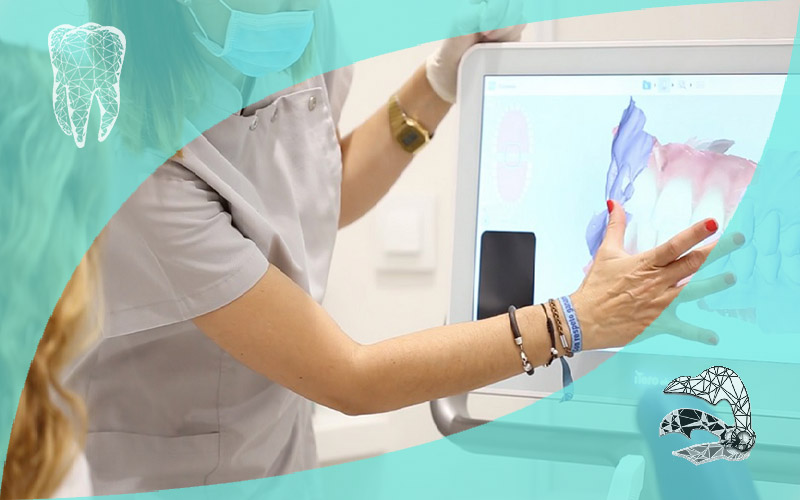
A 3D scan displayed on a screen also enables the visual communication of treatment options with the patient. The best patient is an educated patient. However, communication must be swift and natural.
Additionally, monitoring and simulation apps let medical professionals track and quantify tooth movement or display to patients the expected outcomes of their orthodontic therapy. Your ability to interact with patients, keep them interested during each visit, and treatment acceptance will improve dramatically.
Get More Options
Digital dentistry is fantastic because it lets you develop over time. Intraoral scanning is the starting point, but as time goes on, you can make adjustments to your workflows and include additional indications and treatments. It is feasible to begin designing crowns or even mill them on-site.
The same is true for clear aligners. Now that our open clear aligner workflow is in place, you can start promoting them. The fundamental tenet is that you should only do what you are comfortable doing.
Different Types of 3D Intraoral Scanners in the Market
It is undeniable that 3D technologies, particularly 3D intraoral scanners, are becoming increasingly important in the dental sector. What follows is a list of the available intraoral 3D scanners on the market to help you understand their options.
Aoralscan by Shining 3D
The Aoralscan, according to the manufacturer, is distinguished by its simple operation, realistic color, and intelligent scan (a self-developed scanning software that integrates rich data processing functions for higher-quality digital impressions). It is powderless as well, which means the process is simplified and the patient experience is improved.
The main selling point of this intraoral scanner is data optimization, with AI assisting in the detection and deletion of unnecessary data. With a frame rate of 15 fps, scanning is video-based. Shining 3D warns that accuracy will be impacted outside of those ranges, where the ideal operation will take place between 50°F and 104°F (10°C and 40°C). It is possible to export the scans as STL and OBJ files.
CEREC Primescan from Dentsply Sirona
The CEREC Primescan can process up to 1 million 3D points per second at depths of up to 20 mm. The system is said to make it simple for dentists to digitize difficult-to-reach areas. To ensure hygienic handling, it is asserted that the Primescan comes with a variety of sleeves, including autoclavable and disposable sleeves.
Easy operation is ensured by an integrated touchscreen and touchpad. The intelligent software allows for the processing of up to 50,000 images per second, and when used in conjunction with the CEREC software, it creates an automated workflow that, for example, makes it possible to create full-zirconium restorations in a single session. Thus, a full chairside workflow will be advantageous to dentists.
Emerald S by Planmeca
The Planmeca Emerald S is a small, 229 g device that fits comfortably in users’ hands thanks to its ergonomic design. The 3D scanner captures prints in colors that are accurate thanks to its red, green, and blue lasers. It can scan an entire arch in less than a minute.
The Planmeca Emerald S also includes two additional tips: the Cariosity transillumination tip, which is used to detect caries, and the SlimLine tip, which is thinner and intended to make it easier to access posterior teeth.
Medit i700 from Medit
The Medit i700 is one of the newest intraoral dental 3D scanners on the market. It stands out for providing a more comfortable scanning experience for the patient as well as the dentist. The Medit i700 is 25% smaller and 12% lighter (245g) when compared to the Medit i500, which it replaces.
Additionally, the 3D scanning speed is up to twice as fast and includes a deeper scanning depth as well as a quadrupled color expression quality. The key to maximizing a clinic’s potential is the integration of full-arc accuracy of 11 microns. Medit i700 scanner integration into any dental workflow is simple thanks to its usability and ergonomics.
How Much Do 3D Intraoral Scanners Cost?
Your goals, expansion strategies, and needs will ultimately determine the cost of your solution. The price of impression material, temporary crowns, office time, and lab fees could all be decreased by utilizing a complete system. Dentists who switch to office CAD/CAM systems can save between 60 and 70 percent on laboratory costs. However, what matters most is what you get, not what you pay, in the end. The table below should help you figure out how much you can save in one year through the use of 3D intraoral scanners.
| Number of crowns per month | Cost per analog impression w/ bite registration + triple tray cost | Discount from the lab for digital impression | Savings per month | Savings per year |
| 50 | $50 | $25 | $3,000 | $72,000 |
Fascinated by 3D Intraoral Scanners? Let’s Go Digital!
We assume you are aware of the fact that digital technology is a universal trend that cannot be avoided. Simply put, it offers a straightforward, streamlined, and accurate workflow that we all desire. It brings a wealth of advantages to both professionals and their clients.
Professionals should stay current and offer the best service to captivate their clients. The first and most important step in digitalizing your practice is picking the appropriate 3D intraoral scanner. Dental labs combine this cutting-edge technology with another fascinating one, 3D printing, to create physical models from 3D intraoral scans.